
The Weekly Builder: Your story is your first product, and Khosla Ventures just bet $10M on it
Your weekly signal on capital, attention, technology, and consumer brands.


Making Builders · Builder Weekly · May 19th , 2026

Author’s Thoughts
Every week I work through the startup news for founders that actually moves the needle, not earnings theater, not hype cycles, but the signals that change how smart builders think about where to put their next dollar of time.
There’s a word founders use when they mean “we don’t have a distribution strategy yet”: organic. As in, we’re growing organically. As in, we’re posting and hoping. This week’s signals make the cost of that posture legible. A $10M seed raised on narrative alone. A $1M equity package for a cafe operator at an AI startup. A 7x engagement gap between TikTok and everything else, widening. These aren’t isolated stories they’re the same market correction showing up in different industries at the same time. Attention is being repriced, and the founders treating it as a byproduct of good product are the ones who’ll look back at 2026 as the year they fell behind.
This Week’s 5 Signals
Ian Crosby raised $10M from Khosla for Synthetic two years after Bench Accounting’s 2024 collapse & the round was underwritten by his post-failure narrative, not the product
Two Former Meta Sisters Raise $30M Series A for Nectar Social’s Agentic Marketing OS
TikTok engagement hit 3.70% , a 7x gap over Instagram and over half of Gen Z now skip Google entirely for product discovery
Mejuri (45 stores) and Rothy’s (30+ U.S. locations) are leading a DTC physical retail wave where stores function as brand experience engines, not sales floors
Corgi, a YC-backed AI insurance unicorn, is paying up to $220K base and $1M in equity for a Head of Cafe Expansion, which is proof that IRL is now a moat for AI companies, not just consumer brands
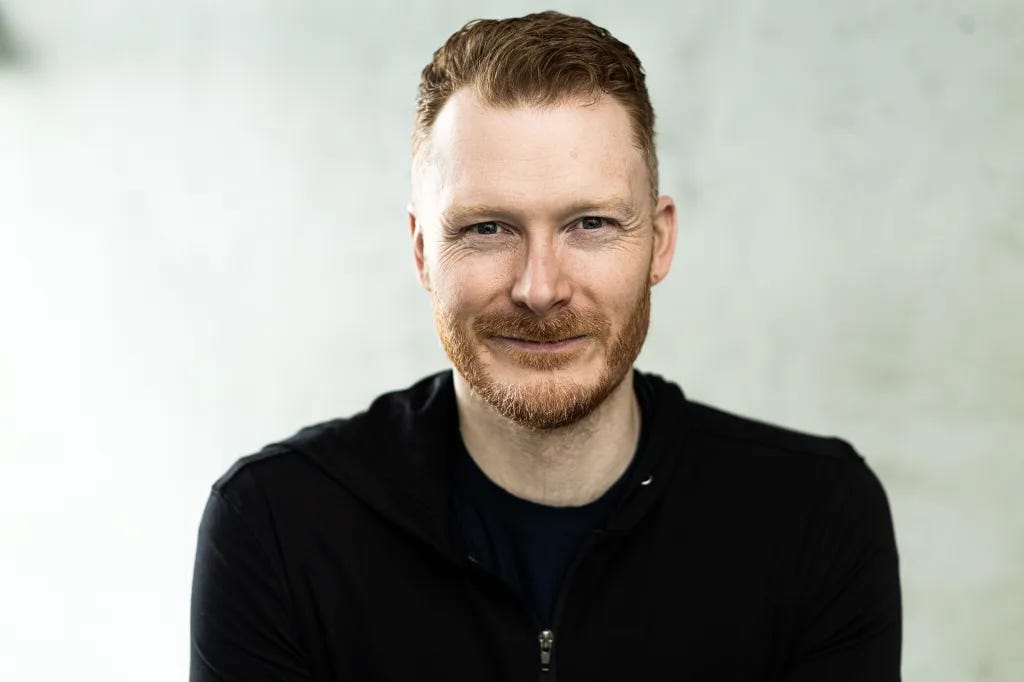
Ian Crosby Raises $10M for Synthetic After Bench Accounting’s 2024 Collapse
Bench co-founder Ian Crosby just closed a $10M seed from Khosla Ventures, Basis Set, and Shopify CEO Tobias Lütke for Synthetic, an AI bookkeeping platform still in design phase. Crosby admitted to Khosla partner Jon Chu that the technical feasibility isn’t there yet but Chu backed him anyway, citing Parker Conrad’s path from forced Zenefits exit in 2016 to a $17B Rippling. Crosby’s post-Bench resume, joining Shopify, then founding and selling Teal to Mercury which gave him the credibility to raise on vision alone.
Founder / Operator Lesson
A failed startup is no longer a permanent mark, it’s a credential, if you can narrate it. Crosby’s three roles post-Bench (Shopify, then founding and selling Teal to Mercury) were the actual fundraise. He wasn’t raising on Synthetic; he was raising on a documented learning curve. The narrative you build after a shutdown matters as much as the failure itself, founders who treat the next 18 months as a public reputation rebuild are the ones funded twice.
Culture / Attention Signal
Investors are now backing “may not be technically possible yet” bets in AI workflows, confident that model capability will catch up within a 2-3 year runway. Timing the model curve is now a valid seed-stage thesis and the founders best positioned to win those rounds are the ones with enough credibility and audience to be trusted on vision alone.
Source: TechCrunch, May 14, 2026
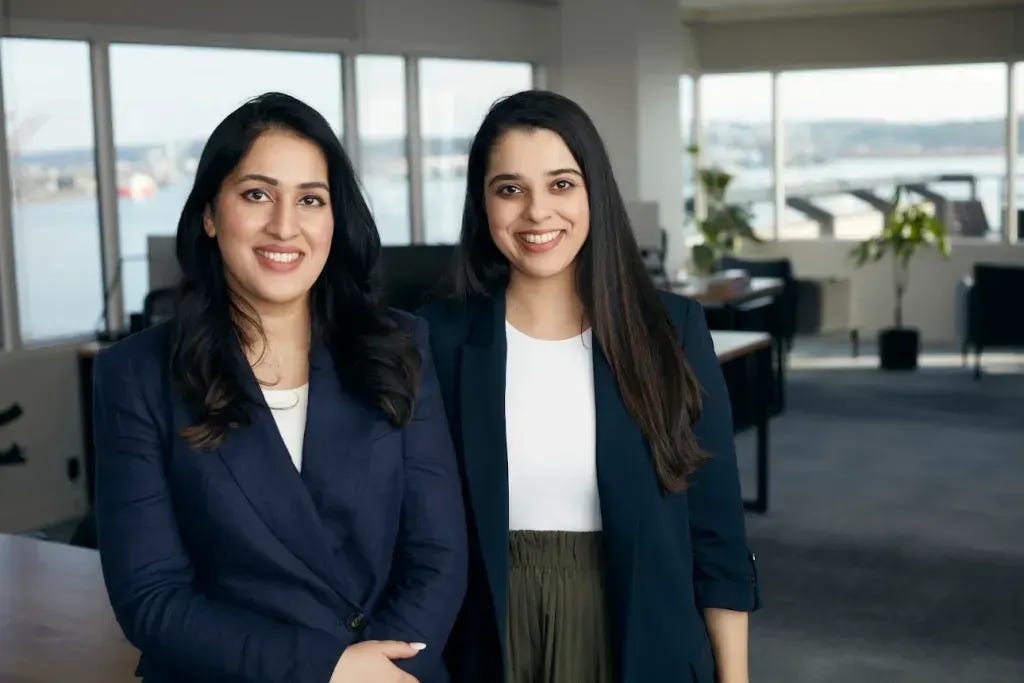
Two Former Meta Sisters Raise $30M Series A for Nectar Social’s Agentic Marketing OS
Sisters Misbah and Farah Uraizee, both former Meta, emerged from stealth with a $30M Series A led by Menlo Ventures’ Anthology Fund (the vehicle built in partnership with Anthropic), plus GV and True Ventures. Nectar already runs 10M social conversations a week and attributes $100M in revenue back to social for brand clients. The product unifies social intelligence, community management, creator workflows, and conversational commerce into one agent-driven layer.
Founder / Operator Lesson
Brands still managing social through disconnected tools are leaving attribution, and revenue on the table. The brands winning in 2026 treat social not as a broadcast channel but as a real-time operating layer where AI agents run 24/7. If your competitor’s agents are converting comments into checkouts while your team is scheduling posts, the gap is structural, not tactical.
Culture / Attention Signal
Two sisters with deep Meta experience just beat the incumbents to market with an agentic approach. The signal: distribution advantage in 2026 lives with whoever can close the loop between social conversation and conversion fastest not whoever has the largest follower count or the biggest ad budget.
Source: TechCrunch, May 16, 2026
TikTok Engagement Hits 3.70%, 7x Instagram’s Rate & 1-in-3 Consumers Skip Google for Product Search
The 2026 Sprout Social benchmarks confirmed what every consumer-product founder has been watching happen: TikTok engagement hit 3.70% (up 49% year-over-year) while Instagram sits at 0.48% and X at 0.12%. One in three consumers now skip Google entirely for product searches, and over half of Gen Z does. Instagram Reels also extended max length to 20 minutes which is a quiet signal that long-form trust-building on social is now platform-supported.
Founder / Operator Lesson
Your SEO strategy is competing with TikTok search, not just Google. If your early customers are Gen Z or millennial consumers, your distribution plan needs a native TikTok presence which is not as an afterthought, but as a primary discovery channel from day one. Treating it as a secondary surface concedes the front door of your funnel.
Culture / Attention Signal
The platform attention gap between TikTok and everything else is widening at a rate that should alarm any brand not actively building there. A 7x engagement advantage isn’t a trend, it’s a structural shift in where consumer trust is formed before a purchase decision.
Source: Digital Information World / Sprout Social, May 2026
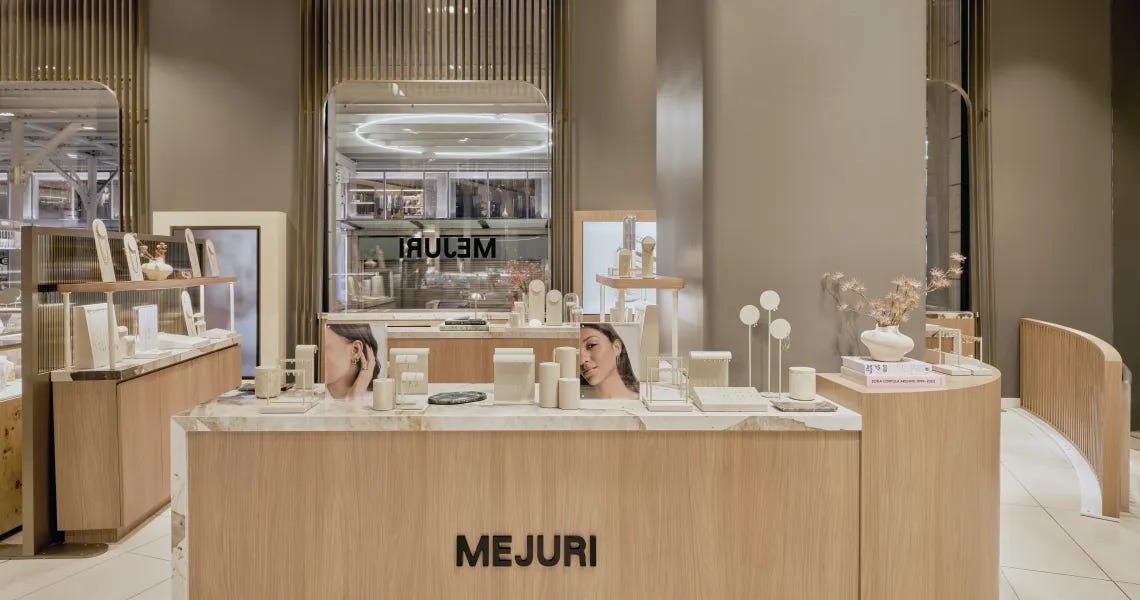
Mejuri, Rothy’s, and a Wave of DTC Brands Are Treating Brick-and-Mortar as Brand Infrastructure
U.S. retail store openings are up ~4% in 2026, and DTC brands are leading the wave. Mejuri now spans 45 stores across four countries with in-person piercings and styling sessions. Rothy’s runs 30+ U.S. locations. None of them are replacing online sales they’re anchoring brand identity in physical space that digital channels structurally can’t replicate. Stores function as immersive experiences, logistics hubs, and community anchors.
Founder / Operator Lesson
If you’re a consumer brand, a single well-designed pop-up or permanent location can create word-of-mouth, press, and community that years of paid ads couldn’t. Physical presence is now a content strategy as much as a retail strategy treat each store opening as an earned media event, not a P&L line.
Culture / Attention Signal
The pendulum has swung: “digital-first” no longer means “digital-only.” The brands getting acquired and growing fastest in 2026 treat physical presence as a brand amplifier, not a cost center. The store has to earn its square footage with an experience you can’t get online.
Source: Shopify / Retail Dive / HBR, May 2026


Corgi, a YC-Backed AI Insurance Startup, Is Offering $1M in Equity to Open Cafes
Andy Eung surfaced what may be the most counterintuitive hire of the year: Corgi a YC-backed AI infrastructure company rebuilding the $1T+ insurance industry is hiring a Head of Cafe Expansion at up to $220K base salary and $1M in equity, with a mandate to launch 3+ cafes globally. The company isn’t pivoting to coffee. It’s building IRL infrastructure on top of an AI product, on the theory that physical presence becomes a defensive moat before peers price it in. Eung notes the broader pattern: LinkedIn has signaled plans for 4,000 creator-led events a year, and venture firms are now hiring creators specifically to convert feed audiences into in-person turnout.
Founder / Operator Lesson
Corgi is running the Apple-retail and Tesla-showroom playbook on top of an AI product. The lesson for founders: “we’re a software company” is not a reason to skip IRL. If your customers will eventually meet competitors in person, the first brand to build that surface owns the relationship. A $1M equity package for the role signals how seriously a top-tier AI company is taking this bet and how undervalued IRL roles still are at most startups.
Culture / Attention Signal
The same logic driving DTC physical retail is now showing up in AI infrastructure. When a unicorn AI startup pays creator-economy compensation to a cafe operator, the message to the market is clear: rented feed attention is not the same asset as attention captured in a room you own. The companies betting on IRL early are positioning for the moment when every category leader is competing for the same offline real estate.
Source: Andy Eung on Twitter, May 2026
The Builder’s Take
Six different stories. One pattern. The founders winning in 2026 are building Attention Infrastructure a deliberately constructed, partially owned, multi-channel system that captures attention where it lives now, converts it into owned channels, and compounds independent of any single platform. Crosby raised because his attention infrastructure (Shopify, Teal, Mercury exit) outlived Bench. Nectar raised because they’re selling Attention Infrastructure as a product. Corgi is paying $1M in equity to build IRL Attention Infrastructure on top of an AI product, the most aggressive version of the trade Mejuri and Rothy’s are running in retail. The TikTok engagement gap, the owned-audience repricing, and the DTC physical-store wave are all the same trade in different forms: stop renting attention, start engineering it. The founders who treat audience-building with the same rigor they apply to product roadmaps are the ones being acquired, funded, and copied next year. If you have not architected this stack yet, the cost of doing so in 2027 will be measurably higher.
Subscribe to Making Builders
Noor Yusuf is the founder of Making Builders, with a background in enterprise revenue and partnerships. She covers go-to-market, brand positioning, and the structural shifts shaping how Year 1–3 founders win before those shifts become consensus. Making Builders goes out every Tuesday founders, operators, and investors to inform how Year 1–3 founders win before those shifts become consensus.